
You’ve spent months, sometimes years, planning your wedding.
You’ve chosen the venue. Found the suppliers. Planned the food. Created the playlist. Worked out where everyone is sitting. And probably had at least seventeen conversations about napkin colours that you never expected to have. (FYI: The Napkin colours are not what your guests are going to be talking about.
But there’s one thing that’s much harder to plan on a spreadsheet: The atmosphere.
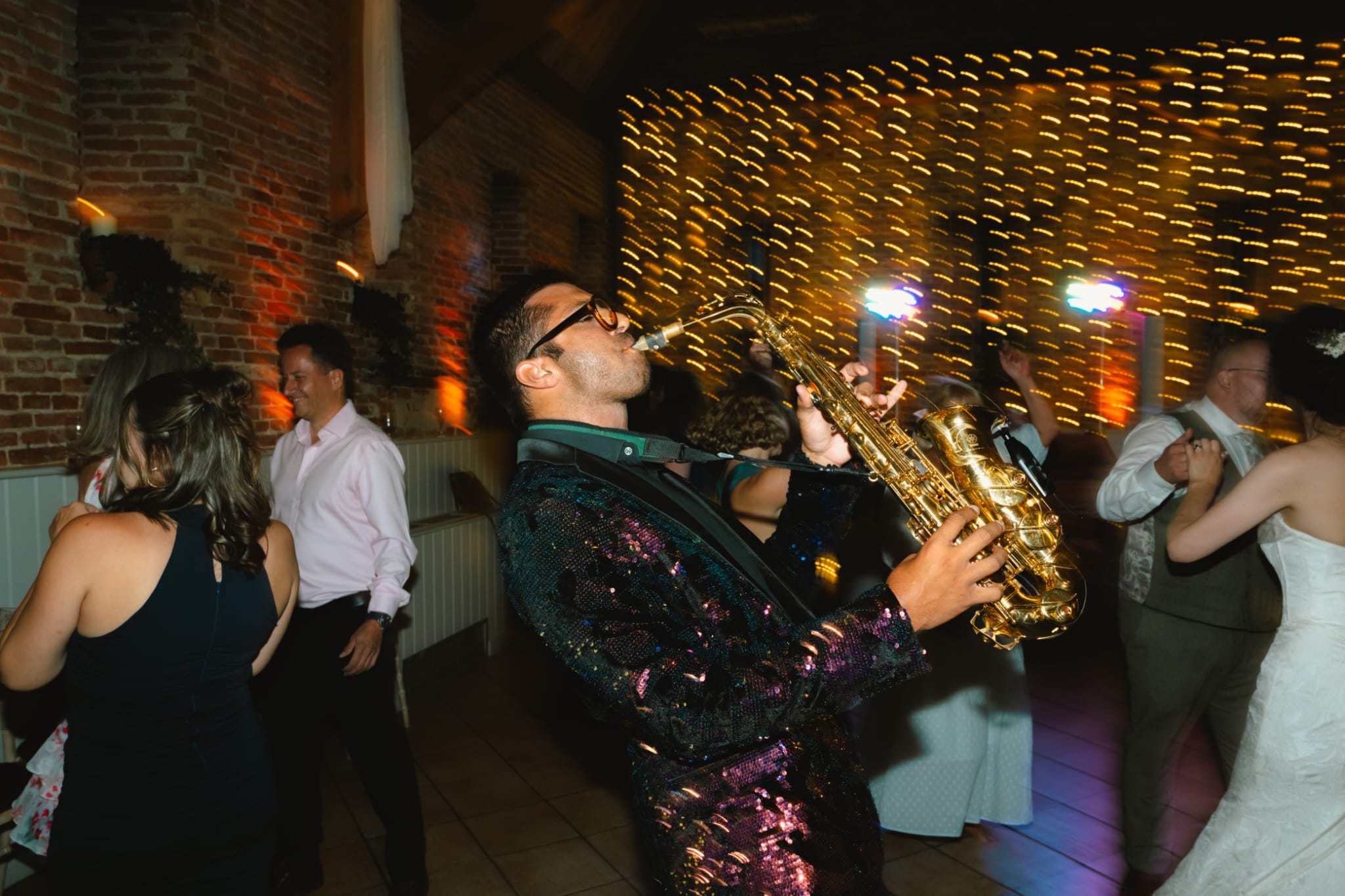
I play at weddings all over the UK, and the best ones aren’t necessarily the biggest, most expensive or most elaborate. They’re the ones that flow.
Guests know roughly what’s happening. There aren’t huge stretches where everyone is waiting around. The music matches the moment. The couple are relaxed enough to actually enjoy themselves.
So, from someone who spends a LOT of weekends watching weddings unfold from ceremony to dancefloor, here are some things that can instantly change the vibe and, more importantly, how to avoid them.
1. Too Much Waiting Around
There is a difference between giving guests time to relax and giving them so much time that they start wondering what’s happening next. A drinks reception is a perfect example.
Give everyone a drink, some food, good music and somewhere comfortable to chat, and a couple of hours can disappear.
But leave people standing around without much happening, particularly if they’re hungry, and suddenly everyone’s checking their watch. The solution isn’t to schedule entertainment every five minutes.
It’s about giving each part of the day a purpose.
Music can make a huge difference here. Live sax during a drinks reception doesn’t need to turn it into a party sometimes its job is simply to create an atmosphere while everyone catches up.
2. Disappearing for Photos for HOURS
Your photographs are important.
You’ll hopefully be looking at them for decades, so of course you should make time to get the shots you want. But your wedding is also one of the rare occasions where virtually everyone you love is in the same place. You probably want to experience some of it with them.
I’ve seen drinks receptions where the couple disappear shortly after the ceremony and don’t reappear until everyone is heading into dinner. Meanwhile, the party is happening without them.
A good photographer will help you plan this. Group photographs can be organised efficiently, and couple portraits don’t necessarily need to mean disappearing for an hour at a time.
You can even sneak away for another 10–15 minutes later when the light is perfect.
Get the photographs. But make sure you’re actually in some of your own wedding memories too.
3. A Playlist That Doesn’t Read the Room
You might LOVE a song. That doesn’t necessarily mean it’s the right song at that exact moment.
One of the biggest advantages of having experienced musicians and DJs at your wedding is that we can react to what’s happening in front of us.
If everyone is chatting happily during drinks, we don’t necessarily need to force them onto an imaginary dancefloor.
Equally, if guests are already singing and dancing at 4pm, there’s no rule saying we have to calm them down because “the party isn’t until later”.
The same applies in the evening. A great DJ isn’t simply pressing play on a predetermined list. They’re watching the dancefloor, seeing what people react to and working out where to go next.
Plan the music, but leave room for the room.
4. Trying to Force the Party
This might sound strange coming from somebody who regularly ends up playing sax in the middle of a dancefloor… But you can’t force people to have fun.
If everyone is happily outside enjoying the last bit of sunshine, dragging them indoors because the timetable says “DANCING: 7:30PM” probably isn’t going to create the packed dancefloor you imagined.
Sometimes the best thing you can do is let the day breathe. Your coordinator, DJ, venue and entertainment suppliers can work together to judge when the moment is right.
Then, when you do make that transition, make it feel intentional. Guests tend to follow the couple and if you’re having a brilliant time, there’s a good chance everyone else will too.
5. Killing the Energy With Too Many Formalities
Speeches.
Cake cutting.
First dance.
Bouquet toss.
Group photograph.
Evening food.
Another announcement.
Another photograph.
Another thing everyone needs to stop what they’re doing for.
None of these traditions are bad. If you love them, absolutely have them.
The problem comes when the party gets interrupted every twenty minutes.
Imagine the dancefloor is finally full, everyone is singing, the energy is building and then—
“Could everybody please make their way outside for…”
And suddenly you’re starting again from zero.
Think about grouping formalities together where possible. Could you cut the cake immediately before the first dance? Could speeches happen during dinner? Could your sparkler photograph happen before the evening party properly begins?
Once you’ve got everyone dancing, protect that momentum.
6. Making Guests Hungry
Never underestimate the effect food has on a wedding atmosphere. People can cope with a surprising amount when they’ve got a drink and something to eat, but hungry guests become tired guests very quickly.
Think about the gaps in your day. If your ceremony is early afternoon but the wedding breakfast isn’t until much later, canapés suddenly become quite important.
And if you’re partying late into the evening? Feed people again. Pizza. Loaded fries. Toasties. Burgers. Bacon rolls. Whatever suits your wedding.
Nobody has ever left the dancefloor at 10pm, discovered pizza has appeared and thought: “What a terrible decision.”
7. Making Everything Too Perfect
This might be the biggest one. Sometimes couples become so focused on everything happening exactly as planned that they struggle to enjoy what’s actually happening.
A wedding is a live event. Something will probably run late, someone might go missing when they’re needed for a photograph, the weather might change. A guest might do something completely ridiculous or your veil may have its own plans.
And sometimes those become the stories you tell afterwards.
The best suppliers will quietly adapt around you.
If we’re running fifteen minutes behind, we’ll work it out. If everyone is having an incredible time outside, perhaps we don’t need to rush them inside. If something changes, we’ll communicate with each other. Your guests don’t know the schedule.
Most of the time, they have absolutely no idea something hasn’t gone according to plan.
Let your suppliers worry about the logistics. You concentrate on getting married.
8. Choosing Music Because You Think You ‘Should’
There are plenty of songs that appear at weddings because they’re “wedding songs”. But if you don’t actually like them… Why are they there?
Your ceremony doesn’t need to sound like anybody else’s ceremony.
Your first dance doesn’t have to be a slow romantic ballad.
Your evening playlist doesn’t need to contain a single song you hate just because somebody told you “everyone loves it”.
And yes, this is where I once again campaign for couples to stop asking: “What music are we supposed to have?”
And start asking: “How do we want this part of our wedding to feel?”
9. Forgetting About the Transitions
This is one of the least glamorous bits of wedding planning, but it makes a huge difference.
How are guests moving from the ceremony to drinks?
How will they know when it’s time for dinner?
What happens between the speeches and the evening?
How do you move everyone towards the dancefloor?
The best weddings often feel effortless because these transitions have been thought about.
You can subtly change the energy during drinks as dinner approaches. You can make your wedding breakfast entrance a huge moment rather than everyone quietly wandering to their tables. Your DJ can change the atmosphere as the room transforms for the evening. You don’t need to fill every second.
You just want to avoid those moments where 100 people are standing around wondering:“Are we supposed to be doing something?”
10. Not Trusting Your Suppliers
You booked them for a reason.
Your photographer knows when the light is best.
Your coordinator knows how long it actually takes to move 100 people from one room to another.
Your caterer knows how long dinner service takes.
Your DJ knows how to build a dancefloor.
Your musician knows when to sit underneath the conversation and when it’s time to turn things up.
Give your suppliers your preferences, must-haves and absolutely-not-under-any-circumstances choices. Then give them enough flexibility to do their jobs. Some of my favourite wedding moments have happened because nobody planned them.
A song suddenly gets everyone singing. The bride ends up next to me on a bench while I’m playing Fireball. The wedding breakfast unexpectedly turns into a party. Someone requests something I wasn’t expecting.
Those moments happen because we’re responding to the people in front of us rather than rigidly following a script.
The Secret? Protect the Atmosphere
Ultimately, there’s no formula for creating a brilliant wedding. A 30-person wedding can have an incredible atmosphere, but so can a 200-person wedding.
You can have a black-tie celebration in a stately home or a completely relaxed party in a barn. You can have every wedding tradition imaginable or virtually none of them.
The important thing is that the day feels like you.
Don’t interrupt a brilliant moment just because the spreadsheet says something else should be happening.
And most importantly?
Actually enjoy your own wedding.
Because if the two people at the centre of it are relaxed, present and having the best time, that energy tends to spread pretty quickly.
Planning Your Wedding Music?
Music can completely change how each stage of a wedding feels. It doesn’t need to be one atmosphere all day.
The question I always come back to is: How do you want this part of your wedding to feel? Once we know that, we can build the music around it. Get in touch to talk all things music for your wedding day!